Seated core exercises offer a fantastic, low-impact way to strengthen your midsection, benefiting individuals with mobility limitations or those seeking gentle core work.
These exercises reduce pressure on joints, making them ideal for beginners, seniors, and those recovering from injuries, requiring minimal equipment like a chair.
Benefits of Seated Core Workouts
Seated core workouts present a multitude of advantages, particularly for individuals facing physical limitations. A primary benefit is the reduced stress placed on the knees, hips, and spine, making these exercises accessible to older adults, beginners, and those rehabilitating from injuries or managing mobility issues.
This approach allows for a safe and effective way to build core strength without exacerbating joint pain or instability. Furthermore, seated exercises promote better posture and balance, contributing to improved functional movement in daily activities. They engage deep stabilizing muscles, enhancing overall core stability and reducing the risk of lower back pain.
The convenience of requiring minimal equipment – often just a chair, with optional resistance bands or hand weights – makes them easily incorporated into any routine. They are a practical solution for strengthening the core, even in limited spaces or during travel, turning otherwise sedentary time into a fitness opportunity.
Who Can Benefit from Seated Core Exercises?
Seated core exercises are remarkably versatile, offering benefits to a wide range of individuals. Older adults often find them ideal due to the reduced impact on joints, allowing for safe core strengthening. Beginners can build a solid foundation of core stability before progressing to more challenging exercises.
Individuals recovering from injuries, particularly those affecting the knees, hips, or spine, can utilize seated exercises to rehabilitate without aggravating their condition. Those with mobility issues, such as arthritis or limited range of motion, will appreciate the accessibility and reduced strain.
Even individuals with generally good fitness levels can benefit, incorporating seated exercises as a variation to their routine or during travel. Anyone who spends prolonged periods sitting can use these exercises to counteract the negative effects of a sedentary lifestyle, improving posture and reducing discomfort. Essentially, anyone seeking a gentle yet effective core workout can find value in this approach.
Essential Equipment for Seated Core Workouts
Fortunately, minimal equipment is needed! A sturdy chair is fundamental, alongside optional resistance bands for added intensity, and light hand weights to increase the challenge.
Chair Selection
Choosing the right chair is paramount for safe and effective seated core workouts. Opt for a sturdy chair without armrests, as armrests can hinder proper form and range of motion during exercises like torso twists and side bends.
The chair should be stable and not wobble, providing a secure base of support throughout your routine. A chair with a flat seat is preferable to one that is deeply contoured, as a flat surface allows for better engagement of your core muscles.
Ensure the chair height allows your feet to rest flat on the floor, with your knees bent at approximately 90 degrees. This positioning promotes proper posture and helps to stabilize your body during movements. Avoid using chairs with wheels, as they can easily move and compromise your balance.
Ultimately, prioritize safety and stability when selecting a chair for your seated core exercises – a solid, reliable chair will contribute significantly to a successful and injury-free workout.
Resistance Bands
Resistance bands are a versatile and affordable addition to your seated core workout, offering progressive resistance to challenge your muscles. They come in varying levels of resistance, allowing you to customize the intensity of your exercises as you get stronger.
Bands are excellent for exercises like seated rows, where you wrap the band around your feet and pull towards your chest, engaging your back and core. They can also be used to add resistance to knee lifts or torso twists, increasing the difficulty and effectiveness of these movements.
When selecting resistance bands, consider a set with different resistance levels to accommodate your progress. Ensure the bands are made of durable material to prevent snapping during use. Always inspect the bands for any signs of wear and tear before each workout.
Proper form is crucial when using resistance bands; maintain control throughout the exercise and avoid overstretching the band. They’re a fantastic way to amplify your seated core routine!
Hand Weights
Incorporating hand weights into your seated core exercises significantly increases the challenge and effectiveness of your workout, promoting greater muscle engagement and strength gains. Start with lighter weights – 1 to 5 pounds – and gradually increase the weight as your core strength improves.
Hand weights are particularly beneficial for exercises like seated torso twists and side bends. Holding a weight in each hand adds resistance, forcing your core muscles to work harder to stabilize your body and control the movement. This leads to improved oblique strength and definition.
When using hand weights, maintain proper form to avoid injury. Keep your back straight and core engaged throughout each exercise. Avoid swinging the weights or using momentum to complete the movement.
Remember to choose weights that allow you to maintain good form throughout the entire set. Hand weights are a simple yet powerful tool for enhancing your seated core routine!
Seated Core Exercises: A Comprehensive Guide
Explore a variety of seated exercises, including knee lifts, torso twists, flutter kicks, marching, and side bends, to target all core muscle groups effectively.
Seated Knee Lifts
Seated knee lifts are a foundational exercise, excellent for engaging hip flexors, lower abdominal muscles, and deep core stabilizers. To perform this exercise correctly, begin by sitting tall at the edge of a sturdy chair, ensuring your back is straight and your shoulders are relaxed.
Place your hands on either side of the chair for balance and stability. Slowly lift one knee towards your chest, consciously contracting your abdominal muscles as you do so. Hold this lifted position for approximately three seconds, maintaining control and proper form.
Then, slowly lower your leg back to the starting position and repeat the movement with the opposite knee. Continue alternating sides for a set number of repetitions, such as 10-15 repetitions per leg. Focus on controlled movements rather than speed, prioritizing proper technique to maximize effectiveness and minimize the risk of injury.
This exercise is particularly beneficial for individuals seeking a low-impact core workout, as it minimizes stress on the knees and spine.
Seated Torso Twists
Seated torso twists are a dynamic exercise targeting the obliques, transverse abdominis, and erector spinae muscles – key components of a strong and stable core. Begin by sitting upright in a chair with your feet flat on the floor and your back straight.
Keep your hands gently clasped in front of your chest or lightly touching the sides of your head (avoid pulling on your neck). Initiate the twist by slowly rotating your torso to one side, keeping your hips facing forward. Focus on engaging your core muscles throughout the movement.
Hold the twisted position for a brief moment, feeling the contraction in your obliques, then slowly return to the center. Repeat the twist to the opposite side. Aim for 10-15 repetitions on each side, maintaining controlled movements and proper form.
This exercise enhances rotational strength and improves spinal mobility, contributing to better posture and overall core stability.
Seated Flutter Kicks
Seated flutter kicks are an excellent exercise for engaging the lower abdominal muscles and improving core endurance. Begin by sitting tall on a chair, maintaining a straight back and engaging your core. Lean back slightly, keeping your back straight to increase the challenge.
Lift both legs a few inches off the ground, keeping a slight bend in your knees. Initiate small, rapid kicking motions, alternating legs up and down, similar to a swimming flutter kick. Focus on maintaining control and avoiding swinging motions.
Keep your core engaged throughout the exercise to stabilize your torso and prevent lower back strain. Perform 15-20 repetitions, or continue for 30-60 seconds, depending on your fitness level.
This exercise effectively targets the lower abs and hip flexors, contributing to a stronger and more toned core;
Seated Marching
Seated marching is a dynamic and accessible core exercise, perfect for all fitness levels. Begin by sitting upright in a chair with your feet flat on the floor and your back straight. Engage your core muscles, drawing your belly button towards your spine for stability.
Lift one knee towards your chest, as if marching in place, while simultaneously lifting the opposite arm. Alternate legs and arms in a coordinated marching motion. Focus on controlled movements and maintaining good posture throughout the exercise.
Increase the intensity by lifting your knees higher or increasing the speed of your marching. Perform for 30-60 seconds, or complete 15-20 repetitions per leg.
Seated marching effectively works the hip flexors, lower abs, and deep core stabilizers, improving core strength and coordination.
Seated Side Bends
Seated side bends are a simple yet effective exercise targeting the obliques and improving core stability. Begin by sitting tall in a chair with your feet flat on the floor and your hands lightly resting on your sides or behind your head.
Slowly bend to one side, reaching your elbow towards your knee while keeping your back straight and core engaged. Avoid rounding your spine or leaning forward. Feel the stretch along your side as you bend.
Return to the starting position and repeat on the other side. Perform 10-15 repetitions on each side, focusing on controlled movements and maintaining proper form.
This exercise strengthens the obliques, which are crucial for rotational movements and maintaining a stable core. It also improves flexibility in the spine and enhances posture.
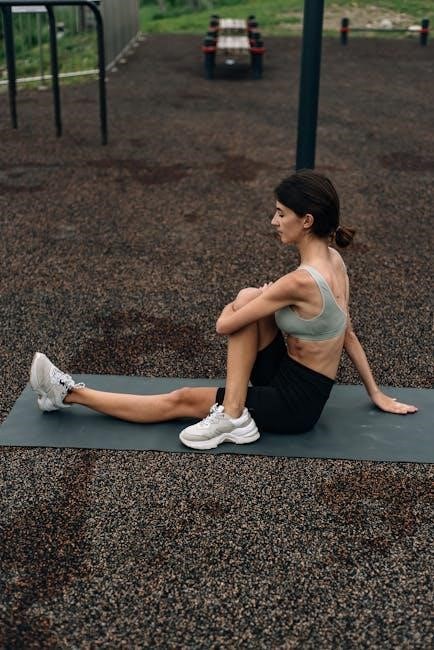
Creating a Seated Core Workout Routine
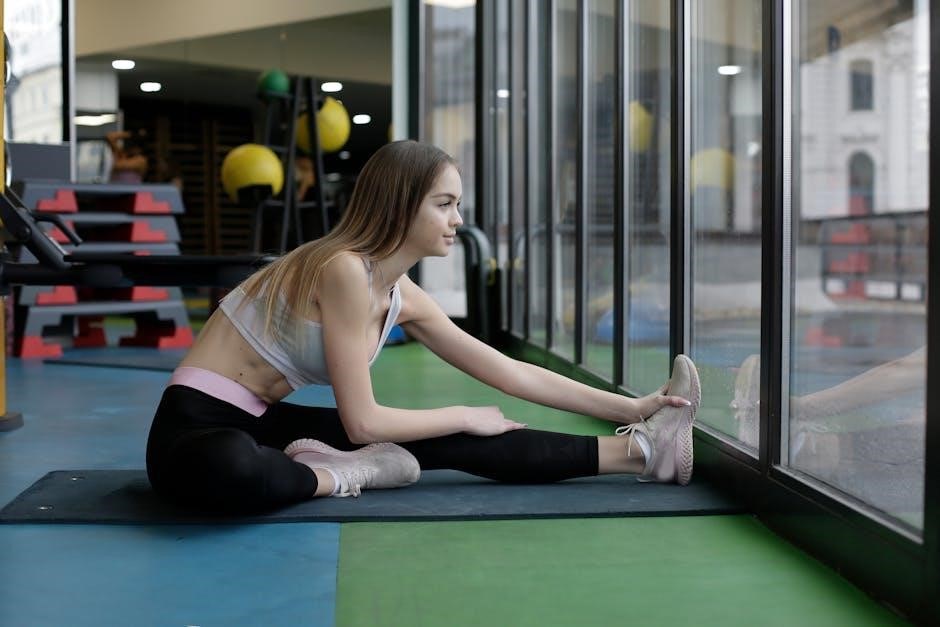
Building a routine involves warming up, performing exercises like knee lifts and torso twists, and cooling down for optimal results and injury prevention.
Warm-up Exercises
Prior to initiating your seated core workout, a proper warm-up is crucial to prepare your muscles and joints, enhancing performance and minimizing the risk of injury. Begin with seated marches, gently lifting each knee towards your chest for approximately one minute; this activates your hip flexors and abdominal muscles.
Follow this with seated torso twists, slowly rotating your upper body from side to side, keeping your core engaged, for another minute. This improves spinal mobility and warms up your obliques. Next, incorporate arm circles – forward and backward – to loosen your shoulders and upper back, contributing to better posture during the exercises.
Finally, perform seated cat-cow stretches, arching and rounding your back while seated, to increase spinal flexibility. Each warm-up exercise should be performed with controlled movements, focusing on engaging your core throughout. A dynamic warm-up like this prepares your body for the more intense core work to come, ensuring a safe and effective workout session.
Cool-down Exercises
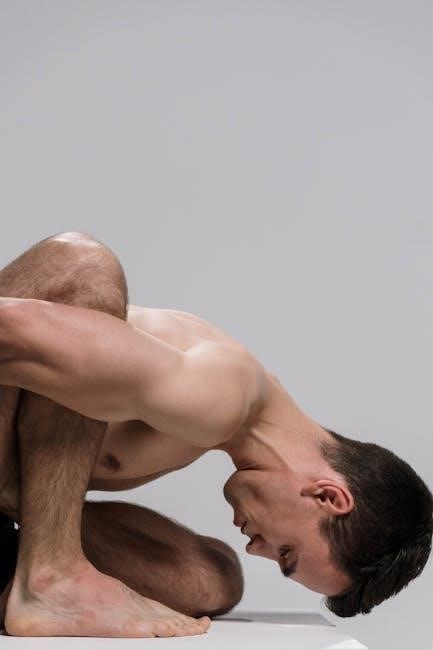
Concluding your seated core workout with a cool-down is essential for gradually lowering your heart rate and preventing muscle soreness. Begin with seated spinal twists, holding each twist for 20-30 seconds to release tension in your back and obliques. This promotes flexibility and aids recovery.
Next, perform seated side stretches, gently reaching one arm overhead and bending towards the opposite side, holding for 20-30 seconds per side. This stretches your intercostal muscles and improves lateral flexibility. Follow this with seated forward folds, slowly bending forward from your hips, reaching towards your feet (or as far as comfortable), to stretch your hamstrings and lower back.
Finally, incorporate deep breathing exercises, inhaling deeply and exhaling slowly, to calm your nervous system and promote relaxation. Hold each stretch without bouncing, and focus on controlled breathing throughout the cool-down. A proper cool-down aids muscle recovery and enhances the benefits of your workout.

Safety Considerations for Seated Core Exercises
Prioritize proper posture during each exercise, maintaining a straight back and engaged core. Avoid movements during travel, ensuring seated safety at all times.
Proper Posture
Maintaining correct posture is paramount when performing seated core exercises to maximize effectiveness and prevent injury. Begin by sitting tall at the edge of a sturdy chair, ensuring your feet are flat on the floor – this provides a stable base of support.
Engage your core muscles throughout each exercise; imagine gently drawing your navel towards your spine. Keep your back straight, avoiding any rounding of the shoulders or slouching. Your head should be aligned with your spine, maintaining a neutral gaze;
Hands can be lightly placed on the sides of the chair for balance, but avoid gripping tightly, as this can strain your upper body. Focus on controlled movements, rather than rushing through repetitions. Proper form is always more important than the number of reps completed.
Listen to your body and stop if you experience any pain; Consistent attention to posture will not only enhance the benefits of your workout but also contribute to overall spinal health and stability.
Avoiding Exercises During Movement
Prioritizing safety is crucial, and a key aspect of this is avoiding seated core exercises while in motion, particularly within a moving vehicle. Performing these exercises during turbulent or erratic movements presents a significant risk of losing balance and potentially causing injury.
The unpredictable nature of vehicle motion – sudden stops, turns, or bumps – can compromise your stability, making it difficult to maintain proper form and control. This increases the likelihood of straining muscles or experiencing a fall, even while seated.
Focus on performing these exercises in a stationary and secure environment. If you’re commuting, dedicate specific, safe stops to your workout rather than attempting to exercise during the commute. Your well-being is paramount; a fitness ‘goldmine’ isn’t worth risking your safety for.
Remember, a controlled environment allows for focused engagement and minimizes the potential for accidents, ensuring a productive and injury-free workout session.
Resources for Seated Core Exercise PDFs
Finding structured guidance for your seated core workouts is easy with the wealth of resources available online in PDF format. Many physical therapists and fitness professionals offer downloadable guides detailing exercise routines, progressions, and modifications.
Searching for “seated core exercises PDF” will yield numerous options, including resources from reputable sources like hospitals, rehabilitation centers, and certified trainers. These PDFs often include visual demonstrations and detailed instructions, ensuring proper form and technique.
Websites dedicated to senior fitness or rehabilitation frequently provide tailored PDFs focusing on seated exercises. Look for resources created by Mandy Rohrig, a physical therapist specializing in core strengthening.
Always prioritize PDFs from qualified professionals to ensure the exercises are safe and effective for your individual needs. Remember to consult your doctor before starting any new exercise program.