
Integumentary System: An Overview
The integumentary system, encompassing skin, hair, and nails, forms a crucial protective barrier against external elements and maintains internal stability.
This system, acting as the body’s first line of defense, shields against pathogens, regulates temperature, and provides sensory input for overall well-being.
It’s a complex network of organs working in harmony to preserve homeostasis and safeguard the body from environmental challenges, ensuring optimal functionality.
What is the Integumentary System?
The integumentary system represents the body’s outermost layer, a dynamic and multifaceted organ system vital for survival. Composed of the skin, hair, scales, feathers, hooves, claws, and nails – depending on the animal – it functions as a protective shield between the internal environment and the external world.
Essentially, it’s an enveloping layer, or covering, acting as a physical barrier against injury, infection, and dehydration. The skin, the largest organ within this system, isn’t merely a wrapping; it’s a highly active interface containing nerve endings that detect sensations like touch, temperature, pain, and pressure.

Beyond protection, the integumentary system plays a critical role in temperature regulation and vitamin D synthesis. It’s a continuously renewing system, constantly shedding old cells and generating new ones, maintaining its integrity and functionality. Understanding this system is fundamental to comprehending overall bodily health and well-being.
Components of the Integumentary System
The integumentary system isn’t a single entity but a complex assembly of distinct components working synergistically. The primary component, the skin, is further divided into layers – epidermis, dermis, and hypodermis – each with specialized functions. Hair, originating from hair follicles, provides insulation and sensory input, varying in type and distribution across the body.
Nails, composed of keratin, protect the distal phalanges of fingers and toes, aiding in manipulation and locomotion. Crucially, exocrine glands – sweat glands and sebaceous glands – are integral parts. Sweat glands regulate body temperature through perspiration, while sebaceous glands secrete sebum, lubricating the skin and hair.
These five key elements – skin, hypodermis, hair, nails, and exocrine glands – collectively define the integumentary system. Their coordinated action ensures protection, regulation, and sensation, contributing significantly to overall physiological balance and maintaining the body’s internal environment.

Skin: The Largest Organ
The skin, the body’s largest organ, is remarkably thin—just millimeters thick—yet vitally important for protection, sensation, and temperature regulation.
Layers of the Skin
The skin comprises three primary layers: the epidermis, dermis, and hypodermis, each with distinct structures and functions crucial for overall skin health and bodily protection.
The epidermis, the outermost layer, provides a waterproof barrier and creates our skin tone. It’s composed of multiple sublayers, including the stratum corneum, which constantly sheds dead skin cells.
Beneath the epidermis lies the dermis, a thicker layer containing connective tissues, blood vessels, nerve endings, hair follicles, and glands. This layer provides strength, elasticity, and sensation.
Finally, the hypodermis, or subcutaneous layer, is the deepest layer, primarily composed of fat and connective tissue. It insulates the body, stores energy, and cushions underlying structures.
These layers work collaboratively to protect against external threats, regulate temperature, and enable sensory perception, demonstrating the skin’s remarkable complexity and vital role.
Functions of the Skin
The skin performs a multitude of essential functions vital for maintaining overall health and homeostasis within the body, extending far beyond simple protection.
Firstly, it acts as a physical barrier, shielding underlying tissues from pathogens, UV radiation, and mechanical injury, preventing infection and damage.
Secondly, the skin plays a crucial role in temperature regulation through sweat production and blood vessel dilation/constriction, maintaining a stable internal environment.
Furthermore, it houses sensory receptors that detect touch, pressure, pain, and temperature, providing vital information about the surrounding environment.
The skin also synthesizes vitamin D upon exposure to sunlight, essential for calcium absorption and bone health, and it helps to excrete waste products through sweat.
These diverse functions highlight the skin’s importance as a dynamic and multifaceted organ system.

Hair: Structure and Growth
Hair, a filamentous keratinous structure, originates within hair follicles and undergoes cycles of growth, rest, and shedding, contributing to protection and sensation.
Hair Follicles and Hair Types
Hair follicles, intricate structures within the skin, anchor each hair and dictate its growth characteristics; these follicles possess sebaceous glands, contributing to hair conditioning.
Variations in hair shape and texture lead to diverse hair types, broadly categorized as straight, wavy, curly, or kinky, influenced by genetics and follicle morphology.
Vellus hair, fine and lightly pigmented, covers much of the body, while terminal hair, thicker and darker, is found on the scalp, eyebrows, and after puberty, in other areas.
Hair growth occurs in phases: anagen (growth), catagen (transition), and telogen (resting), with each follicle operating independently, explaining varying hair lengths and shedding patterns.

The density and distribution of hair follicles differ across body regions and individuals, impacting hair thickness and overall appearance, showcasing the system’s remarkable adaptability.
Functions of Hair
Hair serves multiple crucial functions beyond aesthetics; it provides insulation, helping regulate body temperature by trapping air and reducing heat loss, particularly in colder climates.
On the scalp, hair offers protection from ultraviolet (UV) radiation, minimizing sun damage to the delicate skin, and acts as a physical barrier against minor injuries and debris.
Eyelashes and eyebrows shield the eyes from dust, sweat, and excessive sunlight, while nostril hair filters airborne particles, preventing inhalation of irritants.
Sensory nerves surrounding hair follicles detect movement, alerting us to insects or other stimuli on the skin’s surface, contributing to our awareness of the environment.
Furthermore, hair plays a role in social signaling and communication, conveying information about age, health, and even social status, demonstrating its complex biological and cultural significance.

Nails: Composition and Protection
Nails, composed of keratin, safeguard fingertips and toes, enhancing dexterity and providing counterforce for fine motor skills and locomotion.
Nail Structure
The nail unit is a complex structure, beginning with the nail root nestled beneath the skin. Above it lies the nail matrix, responsible for nail growth – damage here can cause deformities. The nail plate, the visible part, is formed from hardened keratinocytes.
Beneath the nail plate is the nail bed, providing nourishment and support. The lunula, a crescent-shaped whitish area, represents the matrix partially visible through the nail plate. The hyponychium is the skin beneath the free edge of the nail, acting as a protective seal.
Lateral nail folds secure the nail plate’s sides, while the cuticle, or eponychium, protects the matrix from infection. The onychium is the skin at the base of the nail, and proper nail structure is vital for both function and aesthetic appearance, reflecting overall health.
Nail Growth and Health
Nail growth originates at the matrix, averaging around 3.5 millimeters per month for fingernails and slower for toenails. Complete regrowth of a fingernail takes approximately six months, while toenails can take up to a year and a half. Nutritional deficiencies, particularly in protein and vitamins, can hinder healthy growth.
Maintaining nail health involves regular trimming, keeping them clean and dry, and avoiding harsh chemicals. Brittle nails may indicate dehydration or fungal infection, while discoloration could signal underlying health issues. Protecting nails from trauma is crucial, as damage can lead to infections.
Regularly moisturizing cuticles prevents cracking and infection. Observing changes in nail shape, color, or texture is important for early detection of potential problems, prompting timely medical attention for optimal nail wellbeing.

Exocrine Glands of the Integumentary System
Exocrine glands, like sweat and sebaceous glands, are vital components, releasing secretions through ducts to regulate body temperature and maintain skin health.
Sweat Glands
Sweat glands are essential exocrine glands distributed throughout the skin, playing a critical role in thermoregulation through perspiration. These glands produce sweat, a watery fluid containing salts, antibodies, and metabolic waste products.
There are two primary types: eccrine and apocrine glands. Eccrine glands are found all over the body and produce sweat for cooling, while apocrine glands are concentrated in areas with hair follicles – like the armpits and groin – and produce a thicker sweat involved in scent production.
Sweat evaporation cools the skin, preventing overheating during physical activity or in warm environments. Furthermore, sweat contributes to waste excretion and possesses mild antibacterial properties, aiding in skin defense. The functionality of these glands is crucial for maintaining homeostasis and overall bodily health, responding to both internal and external stimuli.
Sebaceous Glands
Sebaceous glands, another type of exocrine gland, are typically associated with hair follicles and secrete an oily substance called sebum. This sebum lubricates the skin and hair, preventing dryness and maintaining their flexibility. These glands are most active during puberty, often contributing to acne development due to increased sebum production.
Sebum also possesses antibacterial and antifungal properties, offering a protective barrier against microbial invasion. The distribution of sebaceous glands varies across the body, being most abundant on the face, scalp, and upper chest;
Proper sebum production is vital for maintaining skin health, but imbalances can lead to conditions like excessively oily or dry skin. The glands’ activity is influenced by hormones, contributing to changes in skin condition throughout life stages.

Integumentary System & Homeostasis
The integumentary system plays a vital role in maintaining homeostasis, regulating body temperature and protecting against external threats for internal balance.
Temperature Regulation
The integumentary system is critically involved in thermoregulation, maintaining a stable internal body temperature despite fluctuating external conditions. When the body temperature rises, sweat glands within the skin are activated, releasing perspiration onto the skin’s surface.
As this sweat evaporates, it carries heat away from the body, providing a cooling effect. Conversely, when the body is cold, blood vessels in the skin constrict, reducing blood flow to the surface and minimizing heat loss.
This constriction helps conserve core body heat. Additionally, the skin contains sensory receptors that detect temperature changes, signaling the brain to initiate appropriate responses, like shivering to generate heat or sweating to release it. These mechanisms demonstrate the skin’s essential role in maintaining thermal equilibrium.
Protection from Pathogens
The integumentary system serves as a primary physical barrier, protecting the body from a constant onslaught of pathogens, including bacteria, viruses, and fungi. The skin’s tightly packed cells and keratinized layers create a formidable shield, preventing microbial entry.
Additionally, the skin’s slightly acidic pH inhibits microbial growth, further bolstering its defensive capabilities. Specialized immune cells, like Langerhans cells, reside within the epidermis, actively monitoring for and responding to invading pathogens.
These cells initiate immune responses, alerting the body to potential threats. Furthermore, the skin’s normal flora – the community of microorganisms living on its surface – competes with harmful pathogens, limiting their ability to colonize and cause infection. This multi-layered defense system is vital for maintaining health.
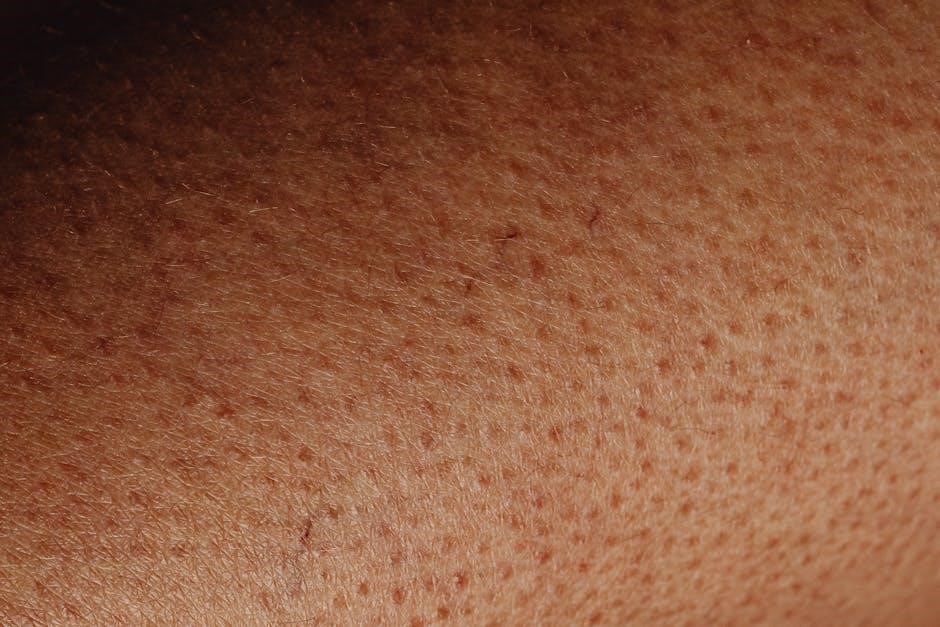
Common Integumentary System Disorders
Various disorders, like skin cancer, eczema, and dermatitis, can affect the integumentary system, disrupting its protective functions and causing discomfort or illness.
Skin Cancer

Skin cancer represents a significant concern within integumentary health, arising from the uncontrolled growth of abnormal skin cells. Prolonged exposure to ultraviolet (UV) radiation – from sunlight or tanning beds – is a primary risk factor, damaging skin cell DNA and initiating cancerous changes.
There are several types, including basal cell carcinoma (most common, slow-growing), squamous cell carcinoma (can spread), and melanoma (most dangerous, potentially fatal). Early detection is crucial for successful treatment, often involving surgical removal, radiation therapy, or chemotherapy.
Regular self-exams and professional skin checks are vital preventative measures. Protecting skin with sunscreen, protective clothing, and seeking shade during peak sun hours significantly reduces the risk of developing this prevalent and potentially life-threatening condition. Awareness and proactive care are key to maintaining skin health.
Eczema and Dermatitis
Eczema and dermatitis encompass a group of inflammatory skin conditions characterized by itching, redness, and often, blistering. These conditions aren’t contagious but can significantly impact quality of life, causing discomfort and affecting appearance. Atopic dermatitis, a common form of eczema, frequently appears in childhood and is linked to allergies and asthma.
Contact dermatitis arises from direct irritation or allergic reaction to substances like soaps, detergents, or plants. Symptoms can range from mild redness to severe blistering and swelling. Managing these conditions typically involves avoiding triggers, moisturizing regularly, and using topical corticosteroids or other prescribed medications to reduce inflammation.
Proper skincare routines and identifying individual irritants are crucial for effective control and minimizing flare-ups, promoting healthier and more comfortable skin.