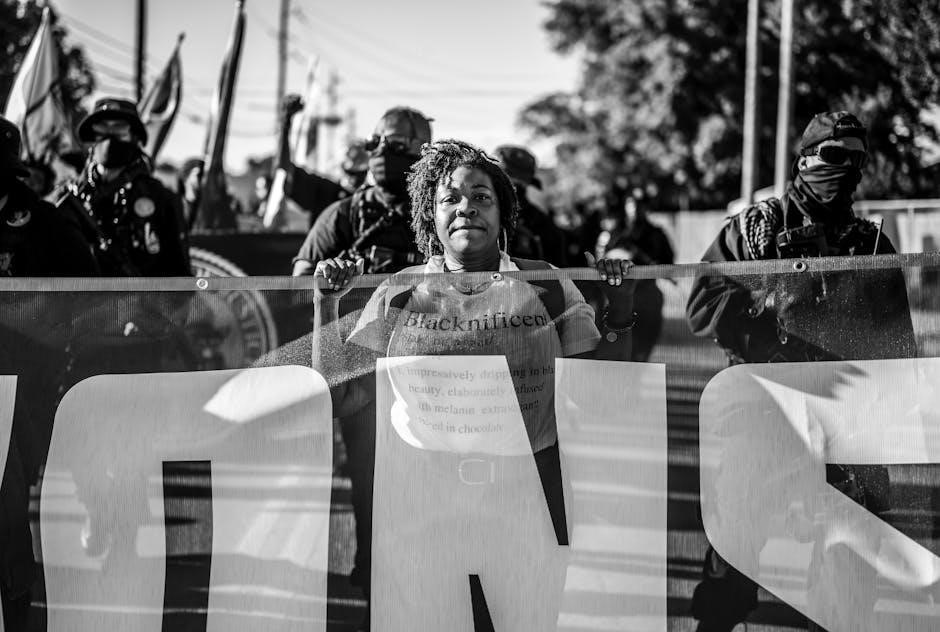
Omi and Winant’s groundbreaking work, Racial Formation in the United States, profoundly reshaped understandings of race as a social construct, not a biological reality.
Published initially in 1986, and revised in 2015, their theory examines how racial categories are historically created, contested, and transformed within societal structures.
The central argument posits that race is a dynamic process—‘racial formation’—shaped by both macro-level political and economic forces and micro-level everyday experiences.
Historical Context of the Theory’s Development
Racial Formation Theory emerged from the intellectual and political ferment of the 1960s and 1970s, a period marked by the Civil Rights Movement and growing critiques of traditional racial paradigms. Omi and Winant, witnessing the limitations of both assimilationist and purely conflict-based models, sought a more nuanced understanding of race.
The decline of legal segregation didn’t equate to the disappearance of racism; instead, racial inequalities persisted and evolved, prompting a need to analyze how race continued to operate in new forms. Existing sociological theories often treated race as a fixed attribute or a simple matter of prejudice, failing to account for its fluidity and institutional embeddedness.
Influenced by Marxist thought, post-structuralism, and critical race theory, Omi and Winant aimed to bridge macro and micro levels of analysis. Their work responded to the perceived shortcomings in understanding the complexities of racial power dynamics in a post-Civil Rights America, laying the groundwork for a dynamic and relational approach to race.
Omi and Winant: Key Contributors
Michael Omi, a Professor of Ethnic Studies at UC Berkeley, brings expertise in critical race theory and Asian American studies to the theory. His research focuses on the intersection of race, politics, and social movements, deeply informing the theory’s emphasis on the political construction of racial categories.
Howard Winant, a Professor of Sociology at UC Santa Barbara, contributes a background in historical sociology and political economy. His work examines the relationship between race and state power, highlighting how institutions actively shape and reinforce racial hierarchies.
Together, Omi and Winant offer a complementary skillset, resulting in a comprehensive framework. Their collaborative approach allowed for a robust analysis of both the micro-level experiences of racialization and the macro-level structural forces that perpetuate racial inequality, solidifying their position as pivotal scholars in the field.
Core Concepts of Racial Formation
Racial formation centers on the idea that race isn’t fixed, but a dynamically constructed social reality shaped by historical, political, and economic forces.
The Social Construction of Race
Central to Omi and Winant’s theory is the assertion that race is fundamentally a social construct, meaning it isn’t rooted in biological or genetic realities, but rather created and maintained through social processes.
This challenges essentialist views of race, which posit inherent, natural differences between racial groups. Instead, racial categories are historically contingent, varying across time and place, and serving specific power dynamics.
Racial meanings are assigned and re-assigned through legal policies, economic practices, and everyday interactions, shaping perceptions and experiences. These meanings aren’t neutral; they often reflect and reinforce existing inequalities.
The construction of race involves both “racial definition” – how groups are categorized – and “racial articulation” – how those categories are linked to other social factors like class and gender.
Ultimately, racial formation demonstrates that race is not a pre-existing condition, but a continuously made and remade social phenomenon.
Racial Projects and Their Components
Omi and Winant introduce the concept of “racial projects” to explain how race is practically enacted and reproduced in society. These projects connect racial meanings to structural power, manifesting in both large-scale political initiatives and everyday practices.
A racial project has two core components: a racial ideology and a structural component. The racial ideology provides the cultural meanings and justifications for racial categories, while the structural component involves the material and institutional arrangements that enforce those meanings.
Examples include policies like slavery, Jim Crow laws, or contemporary immigration policies, each underpinned by specific racial ideologies and supported by legal and economic structures.
Racial projects aren’t always explicit or intentional; they can operate through seemingly neutral policies or unconscious biases. They are constantly evolving, adapting to changing social and political contexts.
Analyzing racial projects reveals how race isn’t simply prejudice, but a deeply embedded system of power relations.
The Role of State Power in Racial Formation
Omi and Winant emphasize the crucial role of the state in racial formation, arguing it’s not merely a neutral arbiter but an active participant in constructing and reinforcing racial categories.
State power operates through legal frameworks, political policies, and institutional practices – shaping who is considered ‘white,’ ‘black,’ or other racial classifications. Historically, the state has legitimized racial hierarchies through laws like those defining citizenship and property rights.
The state doesn’t just reflect existing racial biases; it actively creates and transforms them. This includes defining racial groups for census purposes, enforcing segregation, and regulating immigration.
Even seemingly ‘colorblind’ policies can have racially disparate impacts, demonstrating the state’s continued influence on racial outcomes. The ‘War on Terror’ and its associated policies are a contemporary example.
Understanding the state’s role is vital for dismantling systemic racism and achieving racial justice.
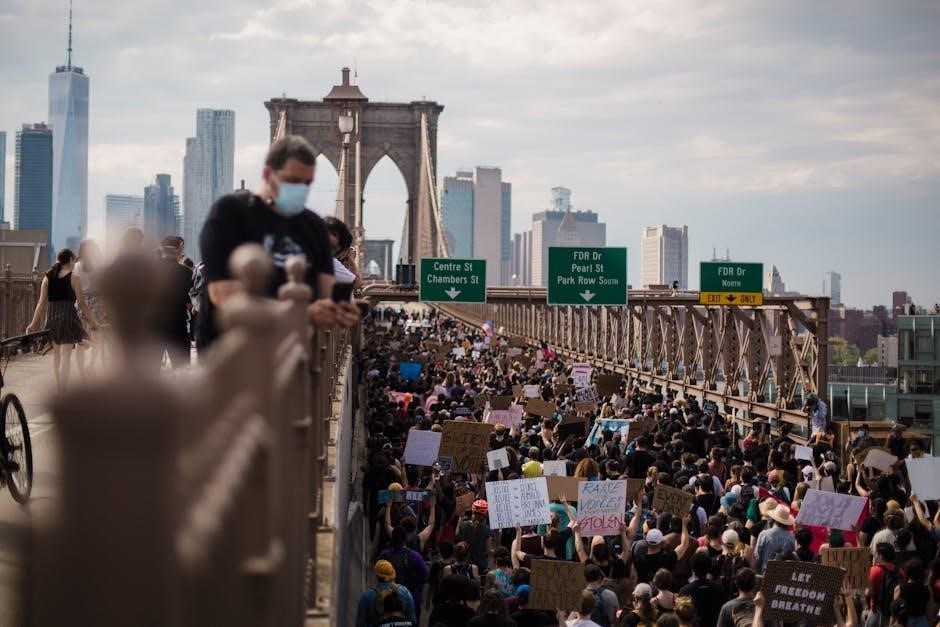
Evolution of Racial Formation in the United States

Omi and Winant traced racial shifts from the 1960s-1980s, noting the decline of overt racism alongside the rise of new racial strategies and political realignments.
Racial Formation from the 1960s to the 1980s
During this period, Omi and Winant observed a significant transformation in the American racial landscape. The Civil Rights Movement challenged legal segregation, yet racial inequality persisted, manifesting in new forms.
They argued that the dismantling of de jure segregation didn’t equate to the eradication of racism; instead, it led to a shift towards more subtle, institutionalized forms of racial discrimination.
The rise of conservative politics and economic restructuring contributed to a “retrenchment” of racial progress, with policies like affirmative action facing increasing opposition.
Furthermore, the emergence of the “colorblind” ideology, while seemingly progressive, masked ongoing racial disparities and hindered efforts to address systemic racism. This era witnessed a complex interplay of legal changes, political maneuvering, and evolving racial ideologies, shaping the contours of racial formation.
Post-Civil Rights Era and Shifting Racial Dynamics
Following the gains of the Civil Rights Movement, Omi and Winant detailed how racial dynamics underwent a crucial shift. The focus moved from overt legal discrimination to more subtle, yet pervasive, forms of racialization.
They highlighted the increasing importance of the state in regulating racial categories and managing racial conflict. This included the rise of the penal system and its disproportionate impact on communities of color.
The concept of “racial projects” became central, illustrating how racial meanings are constructed and deployed to justify social hierarchies and maintain power structures.
Moreover, the emergence of new immigrant groups complicated existing racial categories, leading to debates about inclusion and exclusion. This period saw a redefinition of race, moving away from rigid biological notions towards a more fluid and politically constructed understanding.

Contemporary Applications of the Theory (Post-2000)
Racial formation theory continues to illuminate contemporary issues like immigration’s impact on racial categories, the Islamophobia fueled by the “War on Terror”, and intersectionality.
Impact of Immigration on Racial Categories
Immigration significantly reshapes racial dynamics, challenging existing categories and prompting their redefinition, as analyzed through the lens of racial formation theory.
The influx of diverse populations necessitates the accommodation of new racial and ethnic classifications, often leading to struggles over recognition and inclusion.
Historically, immigration patterns have been racialized, with certain groups facing discrimination and exclusion based on perceived racial inferiority.
Contemporary immigration flows from Latin America, Asia, and Africa contribute to the growing diversity of the U.S. population, complicating traditional racial boundaries.
Omi and Winant’s framework helps explain how the state and other institutions categorize immigrants, impacting their access to resources and opportunities.
Furthermore, the racialization of immigration is often intertwined with class and gender, creating complex intersections of power and inequality.
The theory illuminates how racial projects are deployed to manage and control immigrant populations, reinforcing existing racial hierarchies.
The “War on Terror” and Islamophobia
The “War on Terror,” initiated post-9/11, dramatically reshaped racial formation in the U.S., fostering a climate of Islamophobia and the racialization of Muslim communities.
Omi and Winant’s theory provides a crucial framework for understanding how state power and media representations constructed Muslims as a racial threat.
This process involved associating Islam with terrorism, leading to increased surveillance, discrimination, and violence against individuals perceived as Muslim or Middle Eastern.
The racialization of Muslims demonstrates how racial categories are not fixed but are fluid and responsive to geopolitical events and national security concerns.
Racial projects emerged to justify discriminatory policies, such as enhanced security measures and immigration restrictions targeting Muslim-majority countries.
Islamophobia became deeply embedded in American culture, influencing public opinion and political discourse.
The theory highlights how the state actively constructs racial boundaries to maintain power and control, particularly in times of perceived crisis.
Race, Class, and Gender Intersectionality
Omi and Winant’s Racial Formation in the United States, while foundational, has been further developed through the lens of intersectionality, recognizing the interconnected nature of social categorizations.
Intersectionality acknowledges that race, class, and gender – alongside other identities – create overlapping systems of discrimination or disadvantage.
The theory demonstrates how racial formation isn’t solely about race, but is deeply intertwined with economic structures and gender dynamics.
For example, the experiences of women of color differ significantly from those of white women or men of color, due to the combined effects of racism and sexism.
Class also plays a crucial role, shaping access to resources and opportunities, and influencing how race is experienced.
Contemporary applications of racial formation recognize that racial projects often reinforce existing inequalities based on class and gender.
This intersectional approach provides a more nuanced understanding of power relations and social justice issues.

Criticisms and Debates Surrounding Racial Formation
Some critiques question the theory’s explanatory power regarding economic structures, leading to discussions about its relationship with racial capitalism and material conditions.
Challenges to the Theory’s Explanatory Power
Despite its influence, Racial Formation Theory faces ongoing challenges. Critics argue it sometimes insufficiently addresses the deeply entrenched material realities of racial inequality, particularly the role of economic exploitation.
Specifically, some scholars contend the focus on discursive and political processes can downplay the significance of capital accumulation and systemic economic forces driving racial disparities – a point central to racial capitalism critiques.
Further debate centers on whether the theory adequately explains the persistence of racial hierarchies even after shifts in racial projects and state policies. Questions arise regarding the agency of marginalized groups and the limitations of solely focusing on top-down racial formation processes.
Additionally, the theory’s applicability across diverse national contexts and historical periods is debated, prompting calls for nuanced adaptations and extensions.
Relationship to Racial Capitalism
Racial Formation Theory and Racial Capitalism are increasingly discussed in relation to each other, though they originate from distinct intellectual traditions. While Omi and Winant emphasize the social construction of race through political and discursive processes, Racial Capitalism argues that capitalism inherently produces and relies on racial hierarchies for its functioning.
Scholars like Cedric Robinson posit that racial exploitation isn’t merely a byproduct of capitalism, but foundational to its development. This perspective challenges the notion of race as solely a cultural or political construct, highlighting its material basis in economic systems.
Some critiques suggest Racial Formation Theory doesn’t fully account for this inherent link, potentially underplaying the economic drivers of racial inequality. However, others view the theories as complementary, with Racial Formation explaining how racial categories are formed, and Racial Capitalism explaining why they persist and are reinforced.
Ultimately, integrating both frameworks offers a more comprehensive understanding of race and power.

The Significance of “Racial Formation in the United States” (Book)
This seminal text, continually updated since 1986, remains vital for understanding race’s dynamic construction, influencing fields like sociology and ethnic studies.
Publication History and Editions
Originally published in 1986 by Routledge, Racial Formation in the United States by Michael Omi and Howard Winant quickly became a cornerstone text in critical race studies. This initial edition laid the foundational framework for understanding race as a social construct, dynamically shaped by historical and political forces.
A significantly revised and updated edition was released in 2015, also by Routledge. This second edition incorporated analyses of contemporary racial dynamics, including the impacts of globalization, mass immigration, the “War on Terror,” and the election of Barack Obama. The authors addressed evolving racial categories and the increasing complexity of intersectional identities.
Throughout its publication history, the book has seen numerous printings and remains widely assigned in university courses across disciplines. Digital formats, including PDFs, are readily available, ensuring continued accessibility for scholars and students globally. The enduring relevance of Racial Formation is evidenced by its consistent citation in academic research and ongoing influence on public discourse.
Academic Reception and Influence
Racial Formation in the United States has garnered substantial academic acclaim and exerted a profound influence across numerous disciplines, including sociology, ethnic studies, political science, and law. Jung and Kwon (2013) highlight its impact on sociological theorizing of the racial state, demonstrating its lasting relevance.
The book’s central concept of ‘racial formation’ has become a widely adopted analytical tool for understanding the social construction of race and its dynamic interplay with power structures. Scholars frequently cite Omi and Winant’s work when examining racial inequality, identity politics, and the evolution of racial categories.
Its influence extends beyond academic circles, informing public policy debates and social justice movements. The accessibility of the text, including readily available PDF versions, has broadened its reach and facilitated its application to contemporary social issues, solidifying its position as a seminal work in critical race theory.

Authors’ Backgrounds
Michael Omi, a Professor of Ethnic Studies at UC Berkeley, and Howard Winant, a Sociology Professor at UC Santa Barbara, collaboratively authored this influential text.
Michael Omi’s Contributions
Michael Omi brings a critical interdisciplinary perspective to the study of race, deeply rooted in Ethnic Studies and a commitment to social justice. As Associate Professor at UC Berkeley and Associate Director of the Haas Institute for a Fair and Inclusive Society, his work extends beyond theoretical frameworks into practical applications.
Omi’s scholarship focuses on the intersection of race and state power, examining how legal structures and political processes actively construct and maintain racial inequalities. He’s particularly known for his analysis of the racialization of Asian Americans and the complexities of multiracial identity.
His contributions to Racial Formation in the United States are pivotal, particularly in articulating the concept of racial formation itself and demonstrating its operation in specific historical contexts. Omi’s continued research builds upon this foundation, exploring contemporary racial dynamics and advocating for equitable policies.
Howard Winant’s Contributions
Howard Winant, a Professor of Sociology at UC Santa Barbara, offers a robust sociological lens to the study of race and racism. His work emphasizes the structural and institutional dimensions of racial inequality, analyzing how racial categories are embedded within broader social systems.

Winant’s research delves into the historical evolution of racial projects, examining how dominant groups have strategically utilized race to maintain power and privilege. He’s particularly interested in the relationship between race, class, and the state, and how these forces intersect to shape racial outcomes.
His collaborative work with Michael Omi on Racial Formation in the United States established a foundational text in the field. Winant’s sociological expertise complements Omi’s interdisciplinary approach, providing a comprehensive and nuanced understanding of racial dynamics.